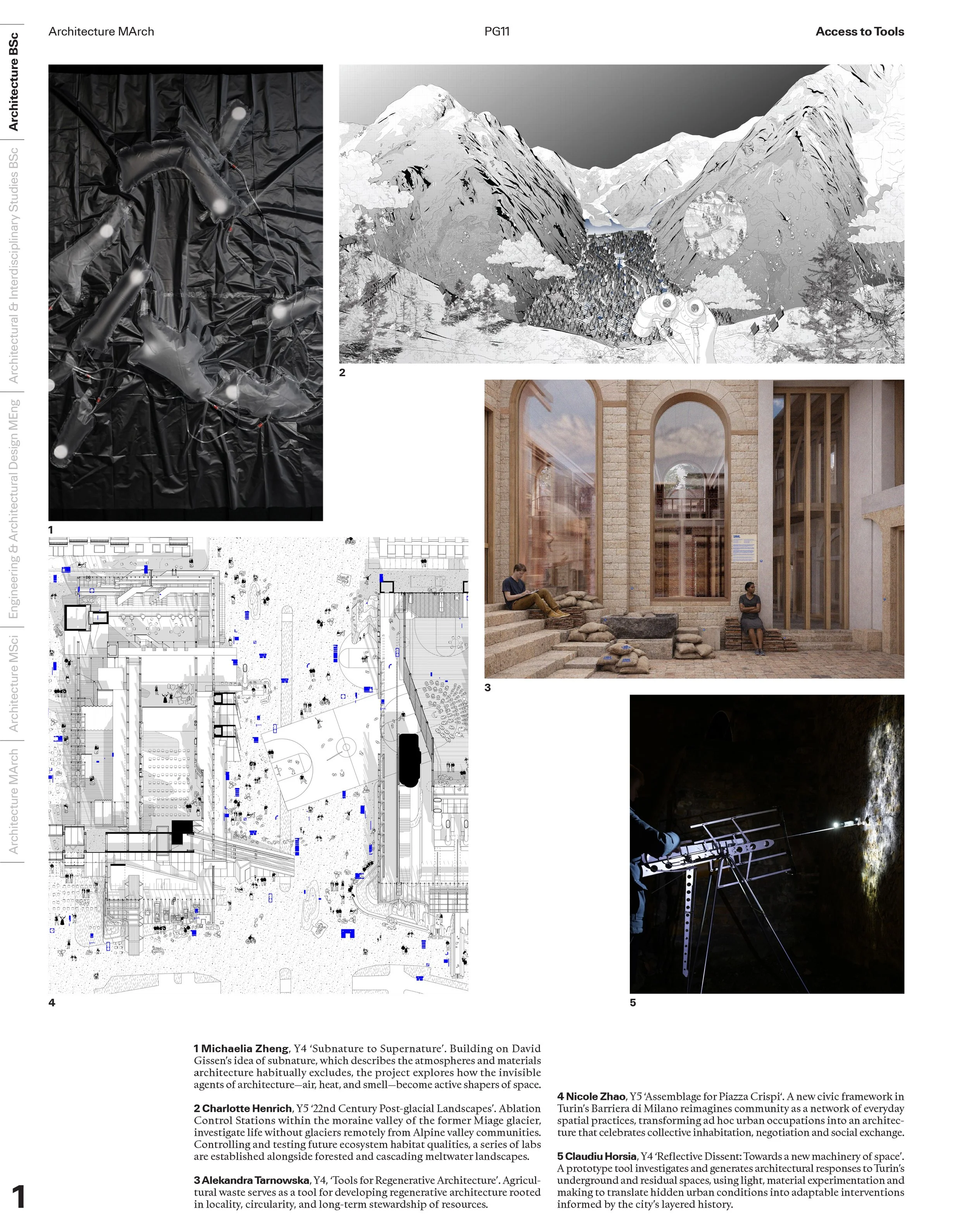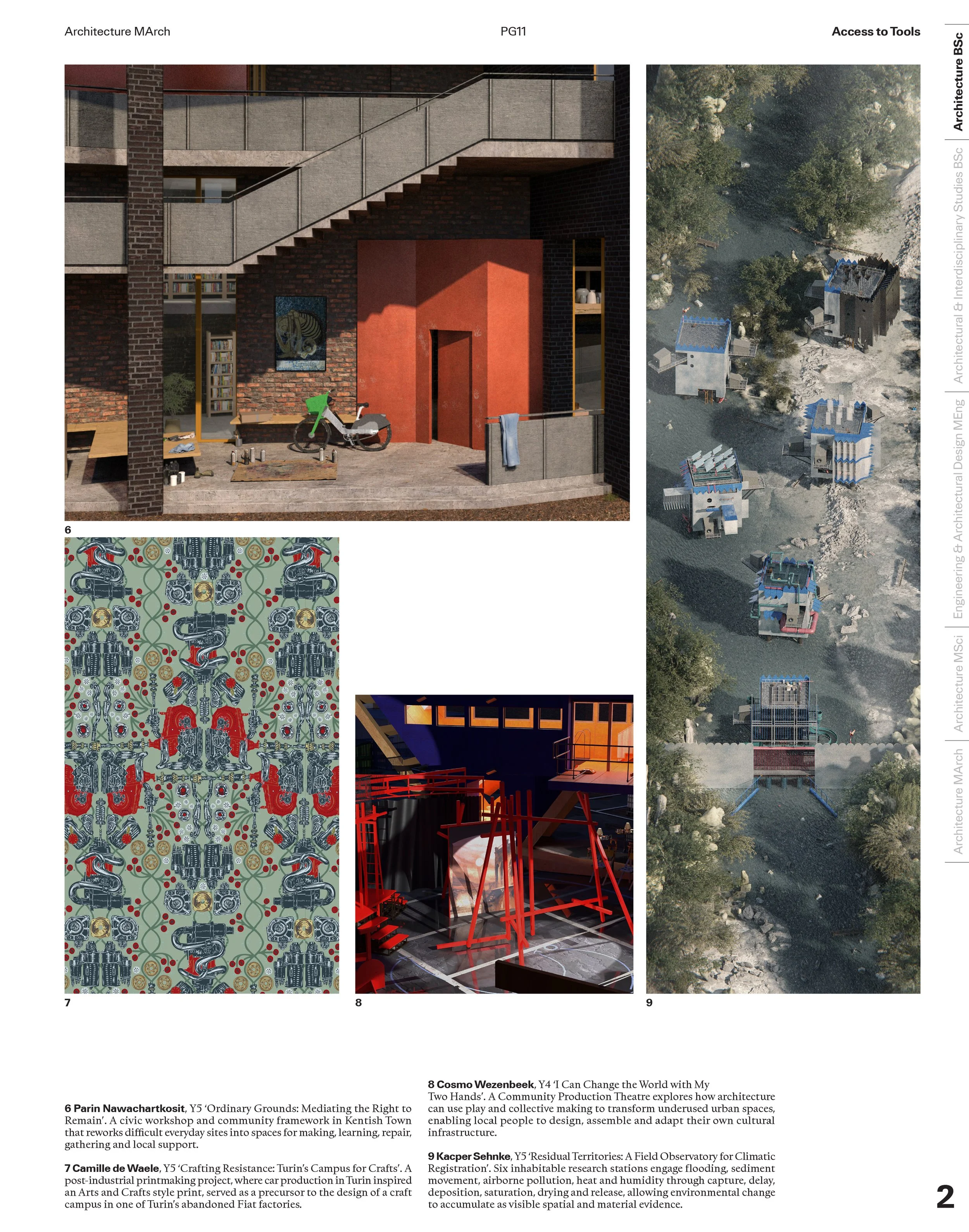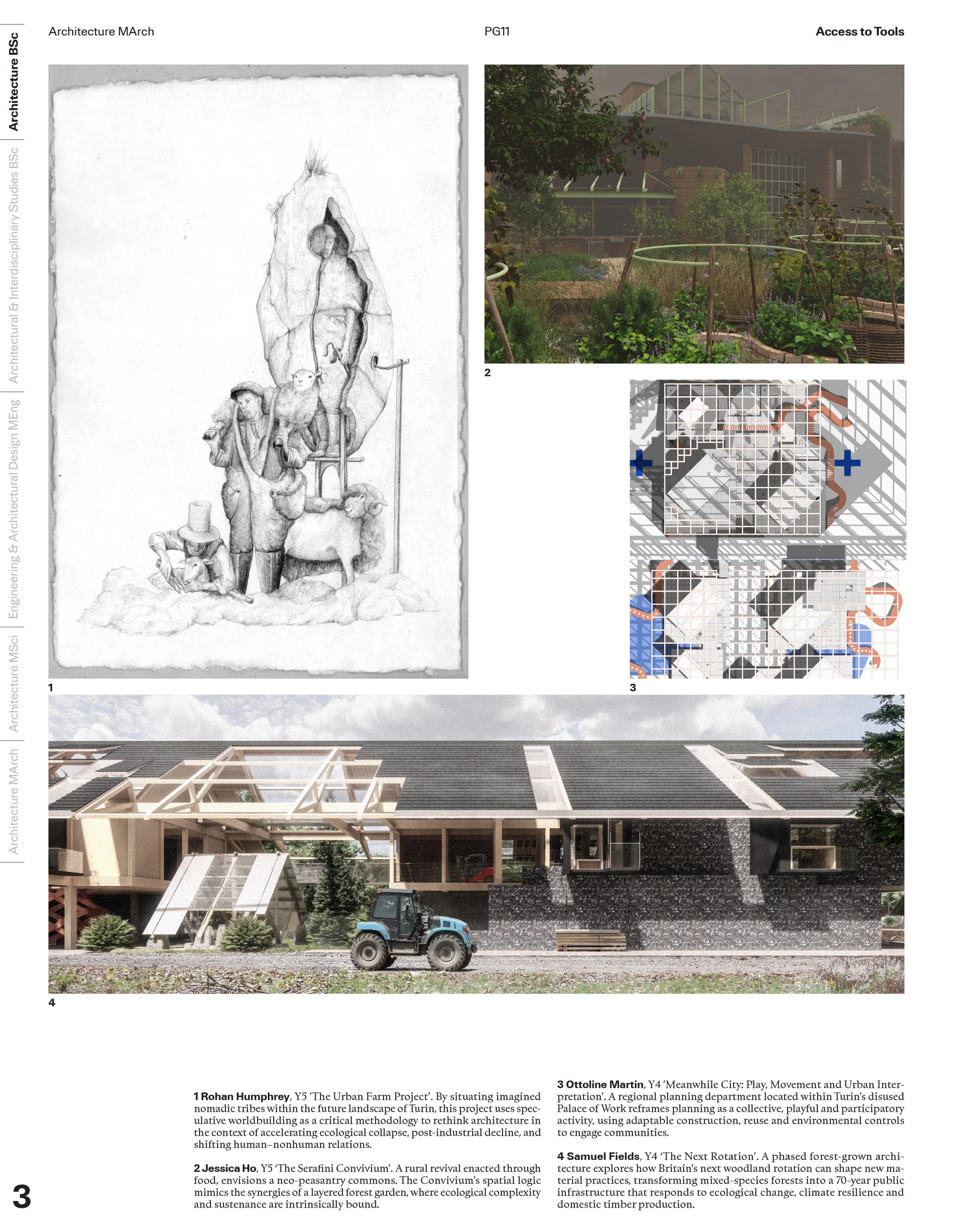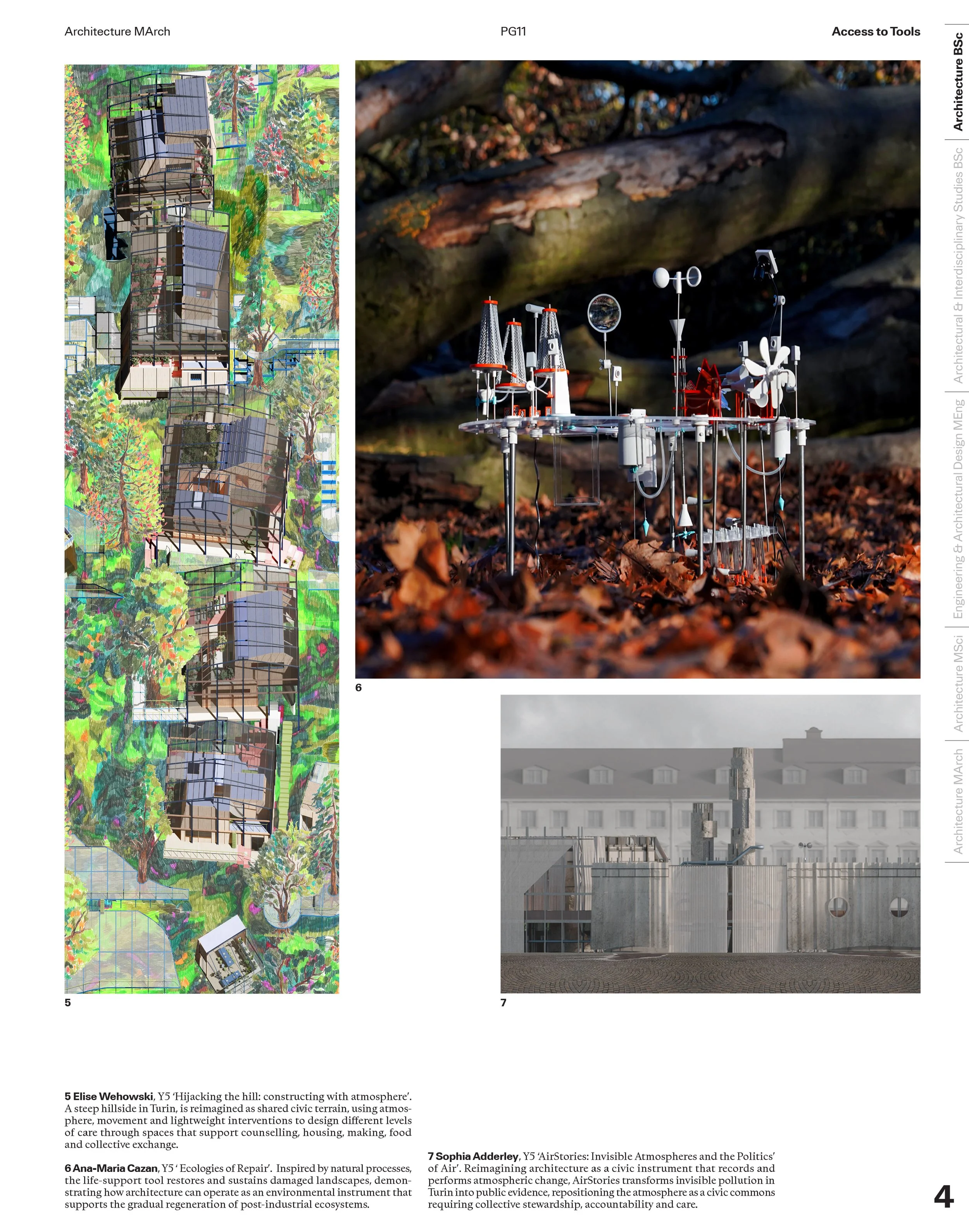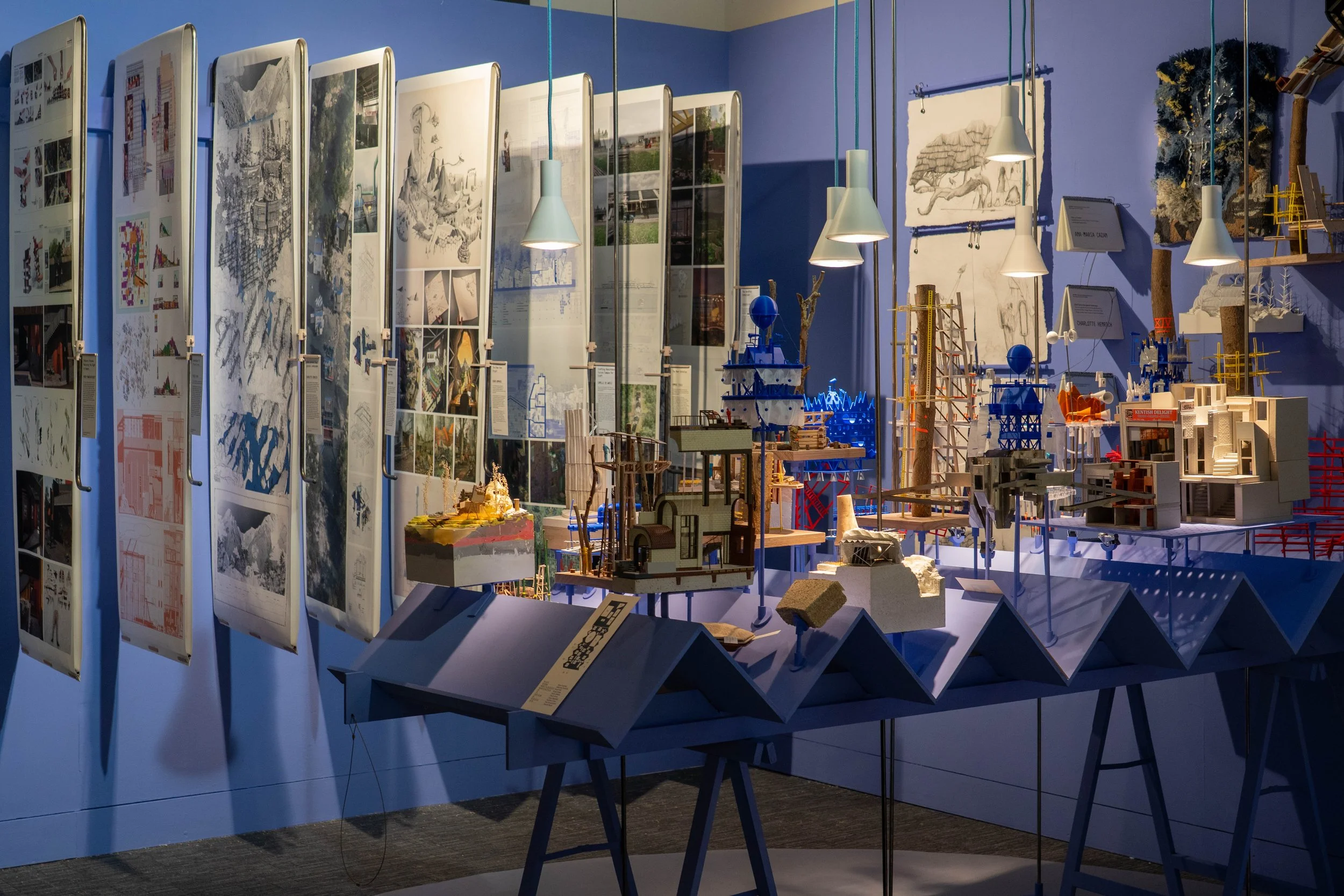
Access to Tools
MArch Architecture, Unit 11, Bartlett School of Architecture
In 1968, countercultural thinker Stewart Brand founded the Whole Earth Catalog (1968–72)[1] with a simple yet radical purpose: to give “access to tools.” Conceived as a compendium of resources, it was assembled to empower readers “to conduct [their] own education, find [their] own inspiration, shape [their] own environment, and share [their] adventure with whoever is interested”[1]. Its legacy is as much methodological as historical. The Catalog’s model of open, decentralised knowledge outlasted the counterculture of the 1960s and 70s, later shifting toward urban tools and global perspectives and even anticipated the collaborative platforms that underpin today’s digital world.
This year the Whole Earth Catalog serves as both provocation and precedent, structuring an introductory project and informing the building designs that follow. Drawing on the units past research in environmental and future-facing themes, students are encouraged to pursue inventive architectural approaches where both conceptual and pragmatic thinking meet playful and experimental methods. We asked ‘How can architecture act as a tool that blurs object, system, and environment to address planetary-scale issues?’
Questions of experimental practice and the relationship between nature and culture took us to Turin and Milan. Their histories of radical experimentation and layered legacies of industry, counterculture, and conceptual art, aided our understanding of how future architecture might operate as a tool: practical, experimental, and speculative.
Across the unit, students approached architecture as an active way of engaging with existing conditions, as well as those of near or speculative futures. Materials and craft are treated as transformative tools and architecture as a methodological practice, providing the means for interpretation and transformation. Projects span from landscape repair, buildings constructed from agricultural waste and environmental architectures that monitor air or capture atmospheres. Others reimagine civic space as sites of performance and governance or propose productive and research landscapes that phase across timeframes, adapting to climatic shifts. With the ethos of the Whole Earth Catalog in mind, architecture is understood as an assemblage of relationships, practices, and environments.
[1] See https://wholeearth.info for a nearly-complete archive of Whole Earth publications
4th Year Students: Samuel Field, Claudiu-Liciniu Horsia, Ottoline Martin, Aleksandra Tarnowska, Cosmo Wezenbeek, Jingwen Zheng
5th Year Students: Sophia Adderley, Ana-Maria Cazan, Camille De Waele, Charlotte Henrich, Jessica Ho, Rohan Humphrey, Parin Nawachartkosit, Kacper Sehnke, Elise Wehowski, Nicole Zhao
Prizes
Samuel Field
Year 4 Bartlett Medal
Year 4 Architectural Design Prize
Design Realisation Prize: Innovation in Detail Prize
Parin Nawachartkosit
Year 5 Architectural Design Prize
Year 5 Bartlett Medal
Camille de Waele
Ambrose Poynter Prize
Ottoline Martin
History & Theory Prize - Critical Aesthetics Prize